Deploying from Azure Marketplace Image
This procedure describes how to install the OVOC server on a virtual machine in a Cloud-based deployment from App image the Microsoft Azure Marketplace.
| ● | Before proceeding, ensure that the minimum platform requirements are met (see Hardware and Software Specifications). |
| ● | Azure OVOC cannot be deployed using APSS (Azure Partner Shared Services) subscriptions which do not support marketplace offers. |
| ● | If you are deploying older OVOC versions, see Deploying Older OVOC Versions using PowerShell. |
| ➢ | To install OVOC from the Microsoft Azure Marketplace: |
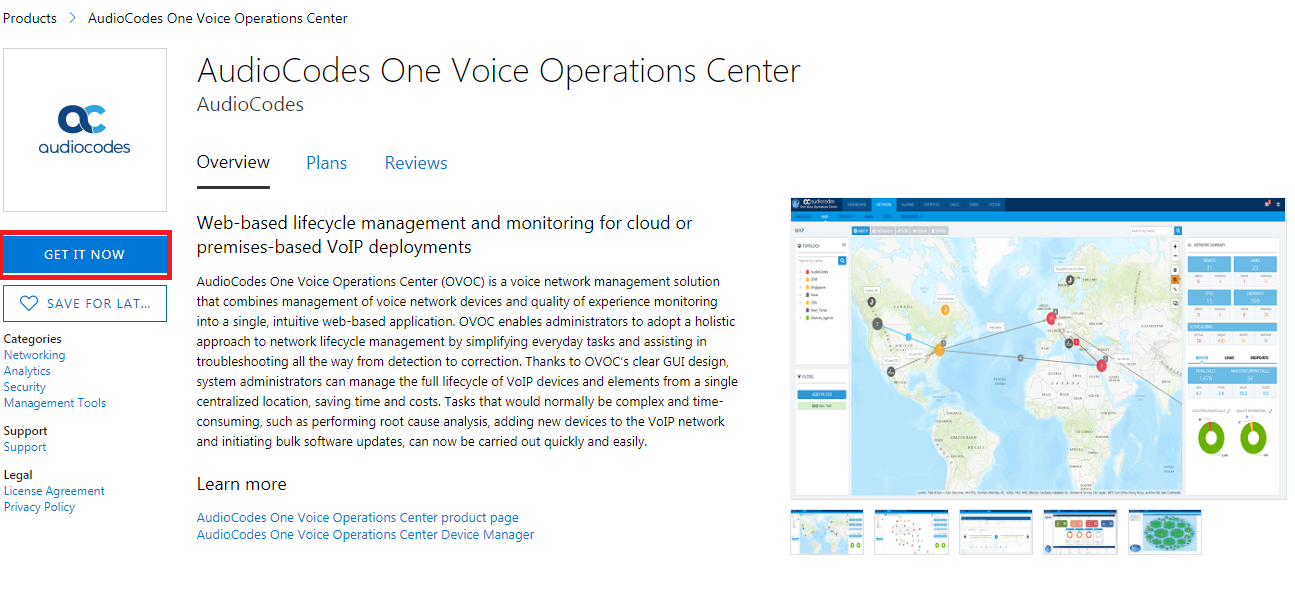
| 1. | In the Azure Marketplace, search for "AudioCodes One Voice Operations Center (OVOC)" and click Get It Now. |
Get it Now
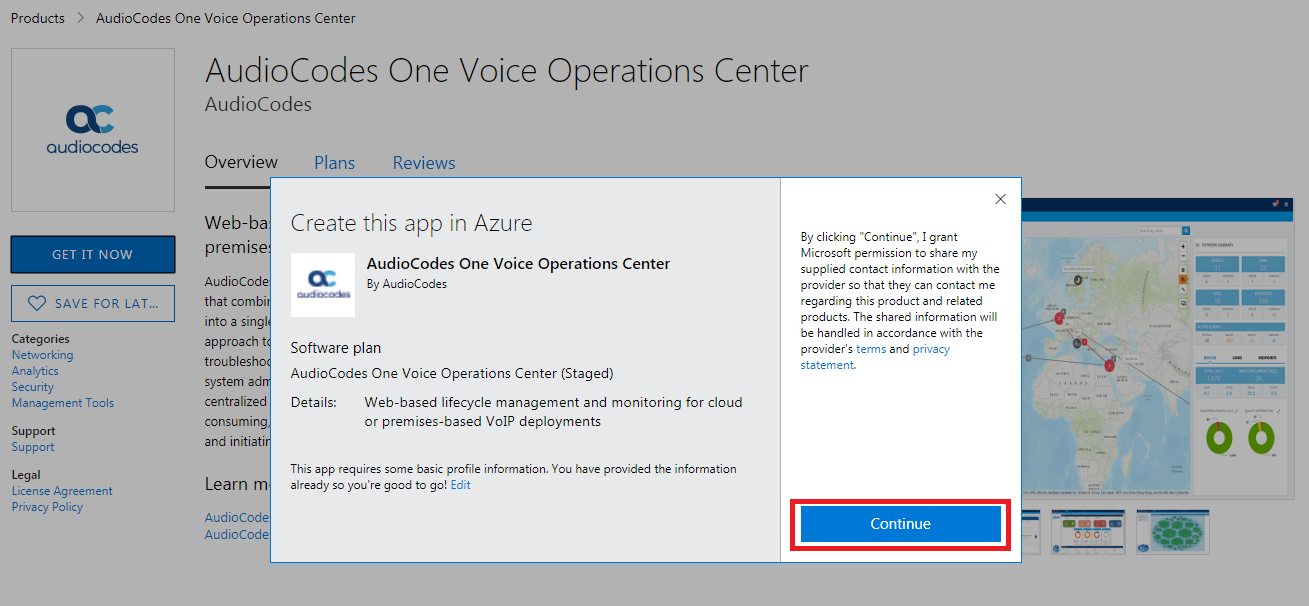
| 2. | Click Continue. |
Create this App in Azure
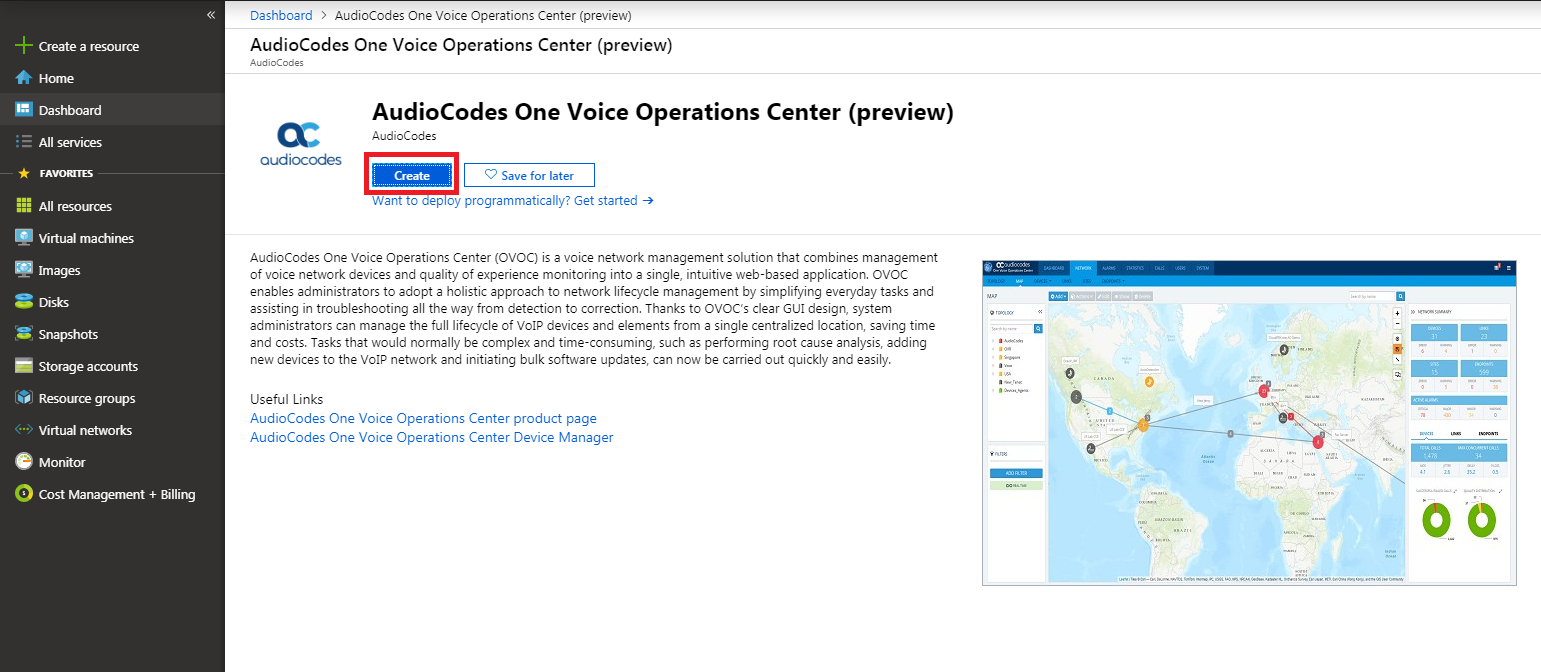
| 3. | You are now logged in to the Azure portal; click Create. |
Create Virtual Machine
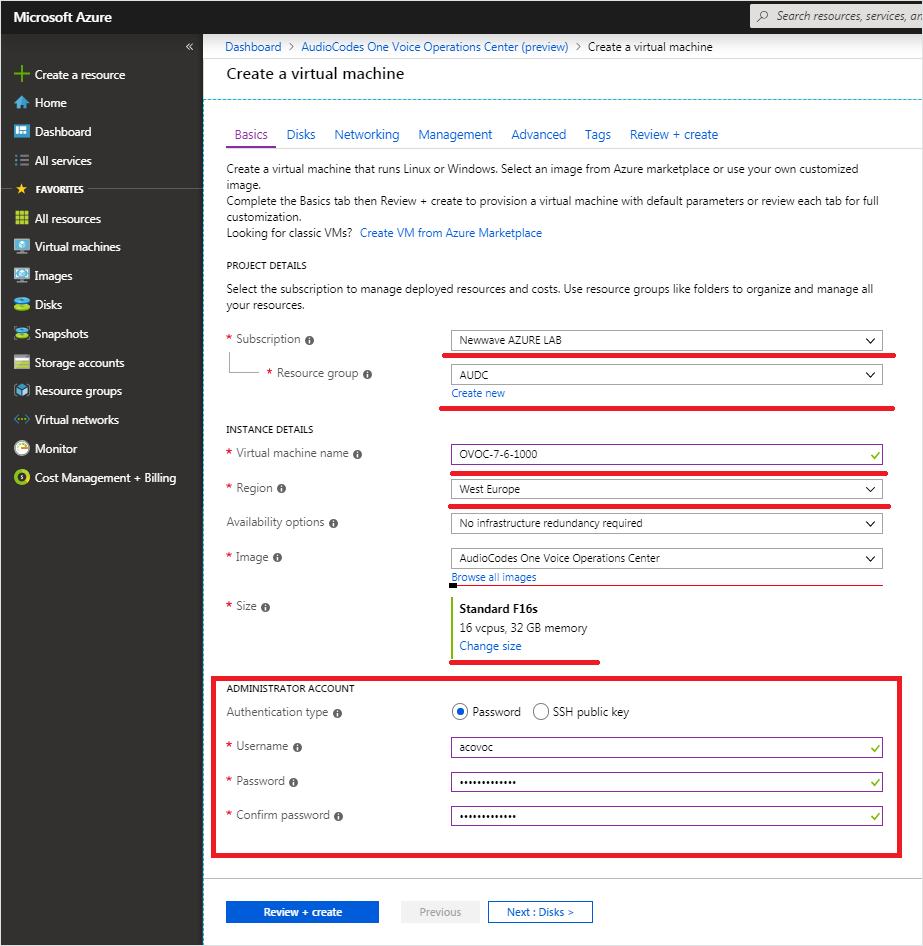
| 4. | Under the Basics tab, configure the following: |
| a. | Choose your Subscription. |
| b. | Choose your Resource Group or create a new one |
| c. | Enter the name of the new Virtual Machine. |
| d. | Choose the Region. |
| e. | Choose the VM Size (see OVOC Server Minimum Requirements). |
| f. | Choose Authentication Type "Password" and enter username and user-defined password or SSH Public Key. |
Virtual Machine Details
| 5. | Click Next until the Networking tab: |
Network Settings
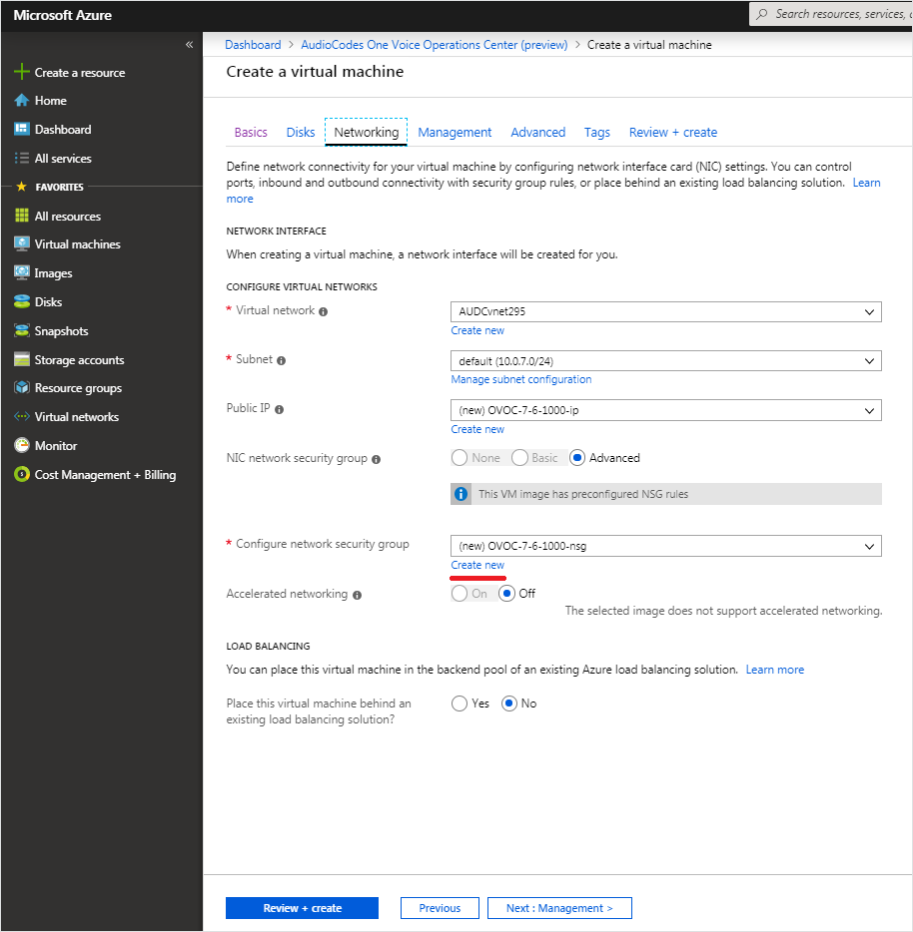
| a. | From the Virtual Network and Subnet drop-down lists, select an existing virtual network/subnet or click Createnew to create a new virtual network/subnet. |
| b. | From the Public IP drop-down list, configure "none", use the existing Public IP or create a new Public IP. |
If you do not wish the public IP address to change whenever the VM is stopped/started, choose StaticSKU (BasicSKU+ Static will be retired by Microsoft Azure on 30/09/2025, see here).
| c. | Under Configure network security group, click Create new to configure a Network Security Group. Configure this group according to the Firewall rules shown in the table below. |
By default, only ports 22 and 443 are open for inbound traffic; open other ports for managing devices behind a NAT (outside the Azure environment) as described in the table below.
Microsoft Azure Firewall
|
Protocol |
Port |
Description |
|---|---|---|
| UDP | 162 | SNMP trap listening port on the OVOC server. |
| UDP | 1161 |
Keep-alive - SNMP trap listening port on the OVOC server used for NAT traversal. This rule is required if Auto-detection is used to add devices in OVOC. See Option 1: Connecting Mediant Cloud Edition (CE) SBC Devices to OVOC on Azure using Public IP Address |
| TCP | 5000 | Communication for control, media data reports and SIP call flow messages sent from Mediant Cloud Edition (CE) SBC. |
| TCP (TLS) | 5001 |
TLS secured communication for control, media data reports and SIP call flow messages sent from Mediant Cloud Edition (CE) SBC. This rule is used if the OVOC Server and managed devices (specifically Mediant CE devices) are deployed in separate Azure Virtual networks communicating behind a firewall. See Option 1: Connecting Mediant Cloud Edition (CE) SBC Devices to OVOC on Azure using Public IP Address |
| NTP | 123 | NTP server port (set the Microsoft Azure site IP address/Domain Name(where the OVOC server is installed) as the NTP server clock source. Referenced in procedures in Connecting Mediant Cloud Edition (CE) Devices on Azure |
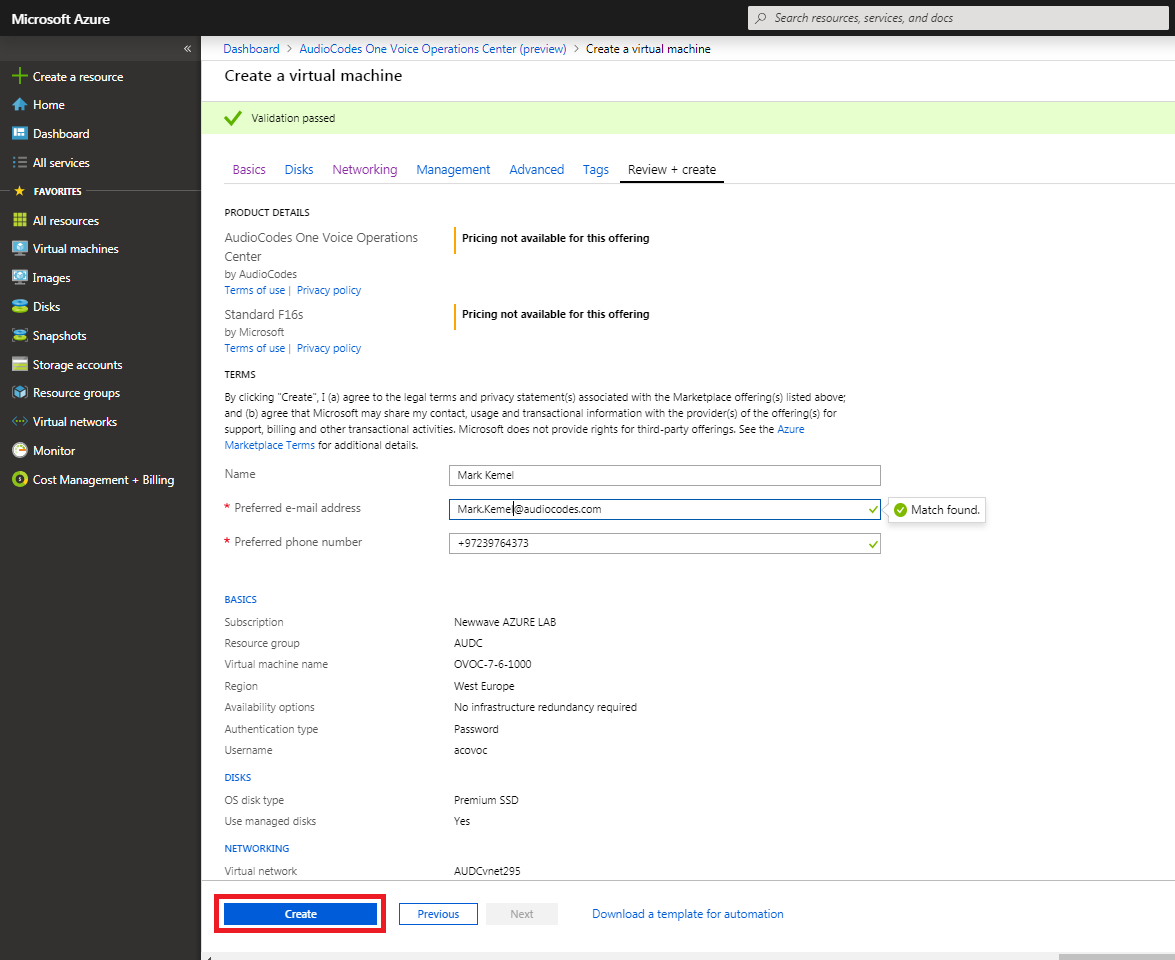
| 6. | Click Next until Review+Create tab, make sure all the settings are correct and click Create. |
Review and Create
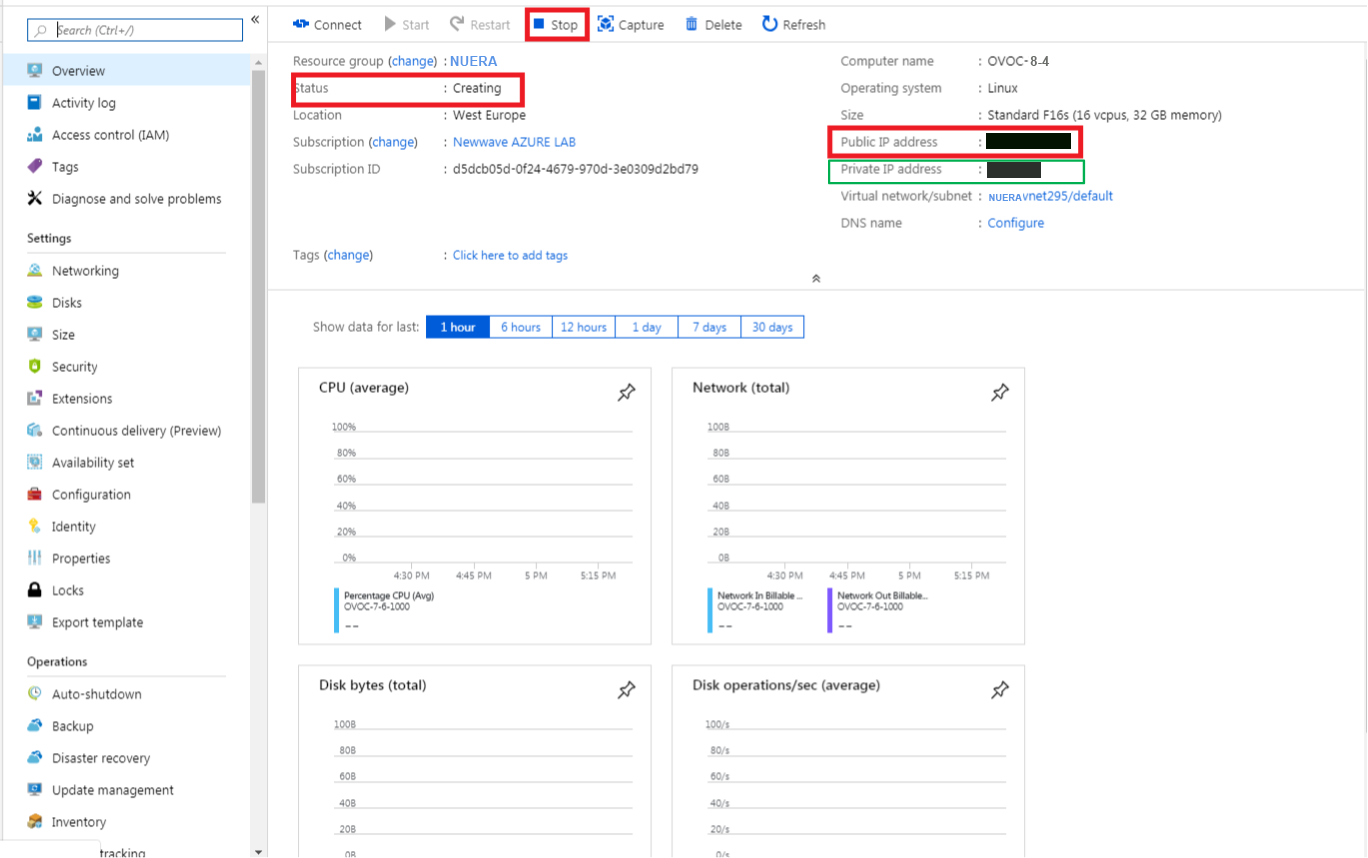
| 7. | Navigate to the "Virtual machines" section, where you can, for example, monitor the Virtual Machine creation process and find the Public or Private (Internal) IP addresses to access the Virtual Machine. |
Note the public or private (Internal) IP addresses as you need to configure them in Configuring the OVOC Server Manager on Azure (Public IP) and Configuring the OVOC Server Manager on Azure (Internal IP) respectively.
Azure Deployment Process Complete