Bring-Your-Own-Storage
This option lets you manage your Blob Storage accounts. The Quick Start process added the Service Provider Azure Blob System Storage account for your region. You can add additional Azure Blob accounts for different locations when this feature is enabled by your Service Provider. For each location, you can monitor the status of the connection and Consumption in GB for the storage utilization. Once you add BYOS locations, they can be associated with Recording profiles.
|
●
|
The ability to add Blob storage accounts requires the BYOS feature key. Contact customer support for details. |
|
●
|
Ensure that you have added your BYOC accounts on your M365 tenant. |
|
●
|
Performance latency may be affected if the storage location is geographically remote to the Live Platform deployment instance. |
|
●
|
Due to an Azure limitation, access cannot be restricted to selected networks when your Azure storage account is located in the same region/location as the AudioCodes service infrastructure. In this scenario, either set Public Network Access to Enabled from all networks for the storage account, or relocate your storage account to another Azure region. |
|
●
|
Data consumption is only displayed for GRS (Geo Recording Storage) storage accounts. |
|
1.
|
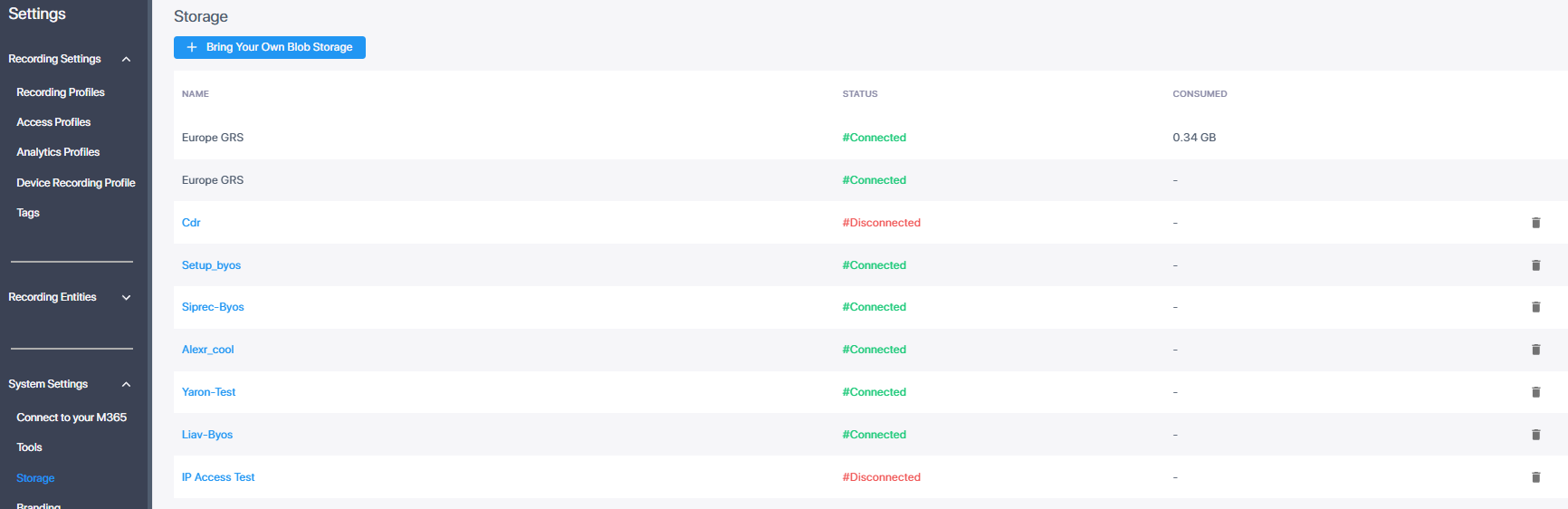
In the Icon pane, click  , and then in the Navigation pane, select System Settings > Storage. The page lists the default storage account and any previously added BYOS accounts. , and then in the Navigation pane, select System Settings > Storage. The page lists the default storage account and any previously added BYOS accounts. |
Default storage account naming convention:
|
●
|
If your service was onboarded with an Essentials user license (single Recording server instance), then the default system storage location name is <RegionName> LRS (Local Recording Storage). |
|
●
|
If your service was onboarded with a Pro user license (Redundancy Recording server instance), then the name is <Region Nane> GRS (Geo Recording Storage). |
|
2.
|
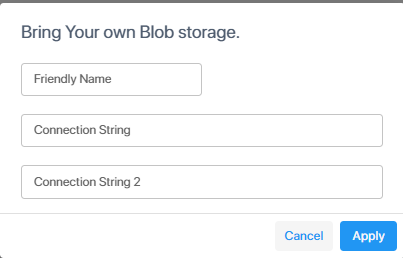
If you have a Pro User license supporting Double Recording with Paired Bot users (Geographical Redundancy Storage), configure the Connection String of the storage container for each region. |
|
3.
|
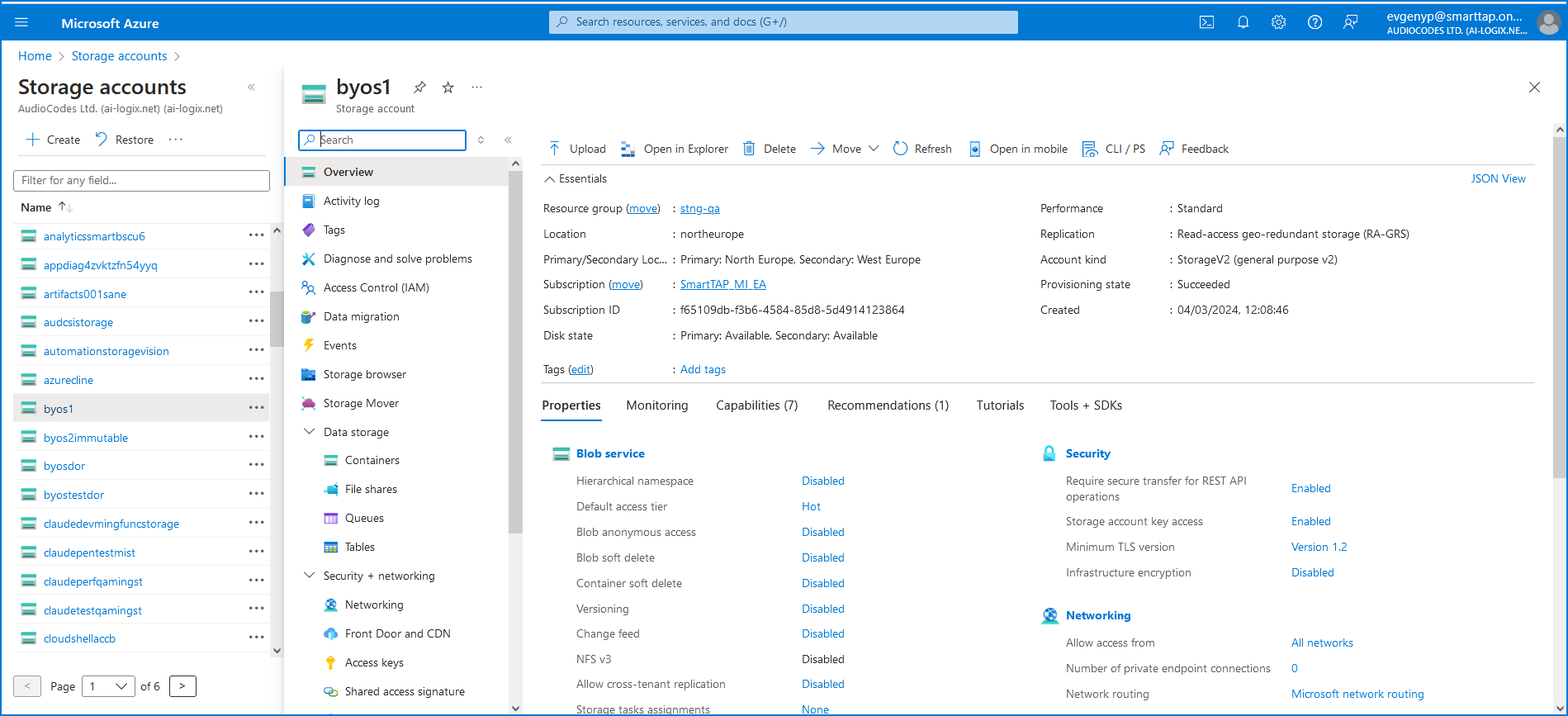
Login to the Microsoft Azure customer tenant, and open the relevant Blob Storage account. |
|
4.
|
In Navigation pane, select Data storage > Containers. |
|
5.
|
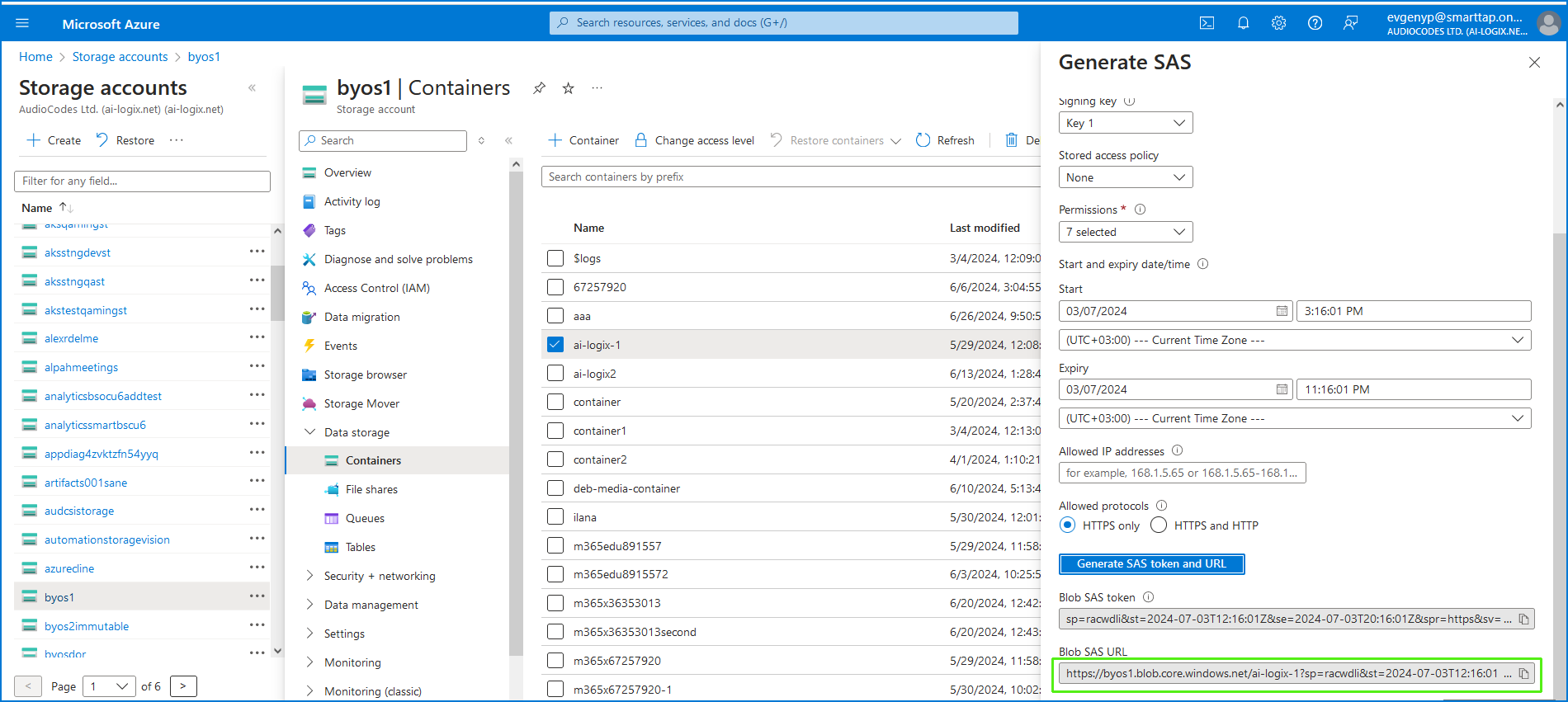
Select and right-click the relevant container in which you wish to store media, then choose Generate SAS. |
|
a.
|
Select the Account key check box. |
|
d.
|
Select all permission check boxes. |
|
e.
|
Allowed protocols HTTPS only. |
|
7.
|
Click Generate SAS token and URL. |
|
8.
|
Copy the Blob SAS URL value to notepad. |
|
9.
|
Return to the Storage page in the Live Platform interface. |
|
10.
|
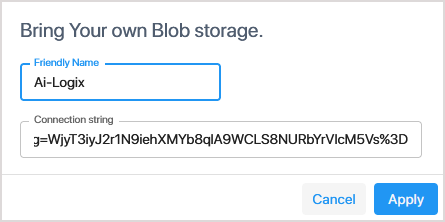
Click Bring Your Own Blob Storage. |
|
11.
|
Enter the name of the Blob storage container. |
|
12.
|
Paste the Blob SAS URL that you copied above to the Connection string field. |
|
13.
|
Click Apply. The new BYOS account is added. |
You can edit BYOS storage accounts or remove BYOS accounts that are not in use. Default storage accounts cannot be modified or deleted.