Upload Live UC numbers
The Customer Leads page lets you upload phone numbers to the customer tenant service. Numbers are attached to a Calling Profile that is mapped to the SBC device used to route calls for the configured numbers.
| ➢ | To upload numbers: |
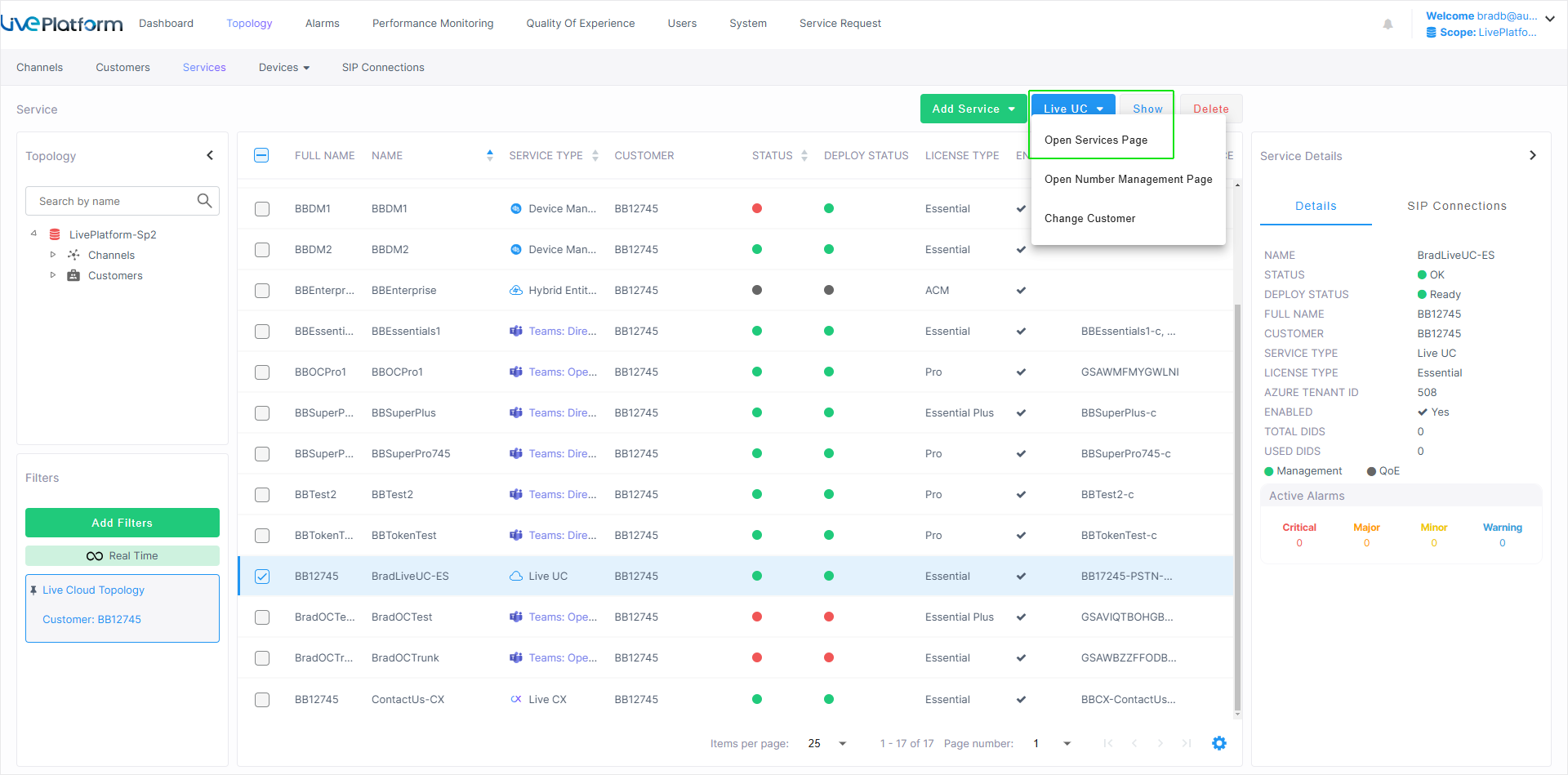
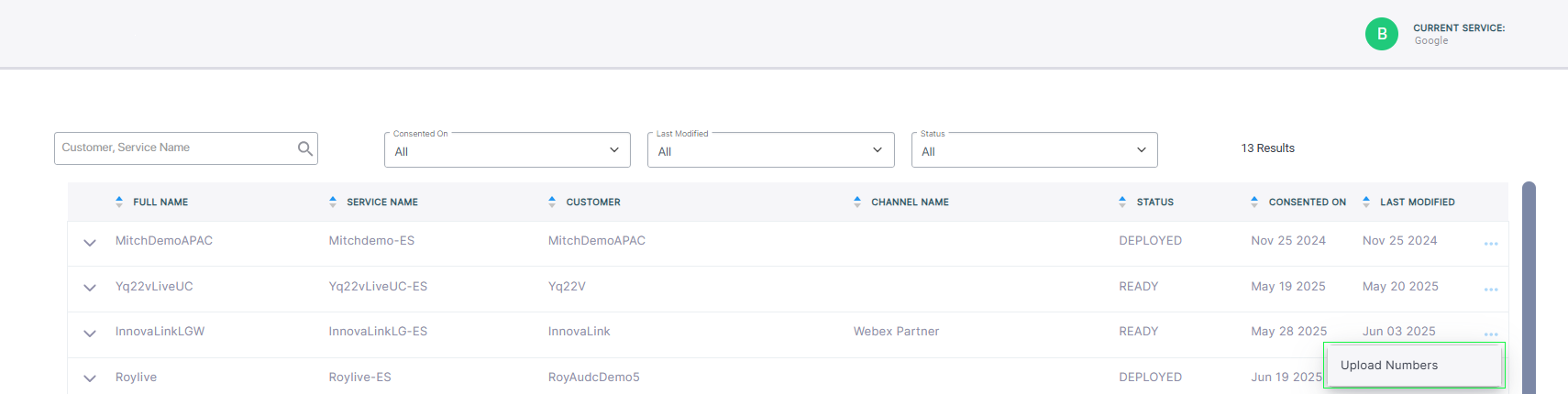
| 1. | From the Live UC drop-down list, choose Live UC > Open Services Page. |
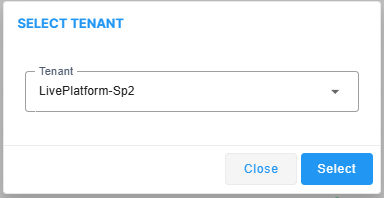
| 2. | From the Tenant drop-down list, choose the Service Provider tenant and then click Select. |
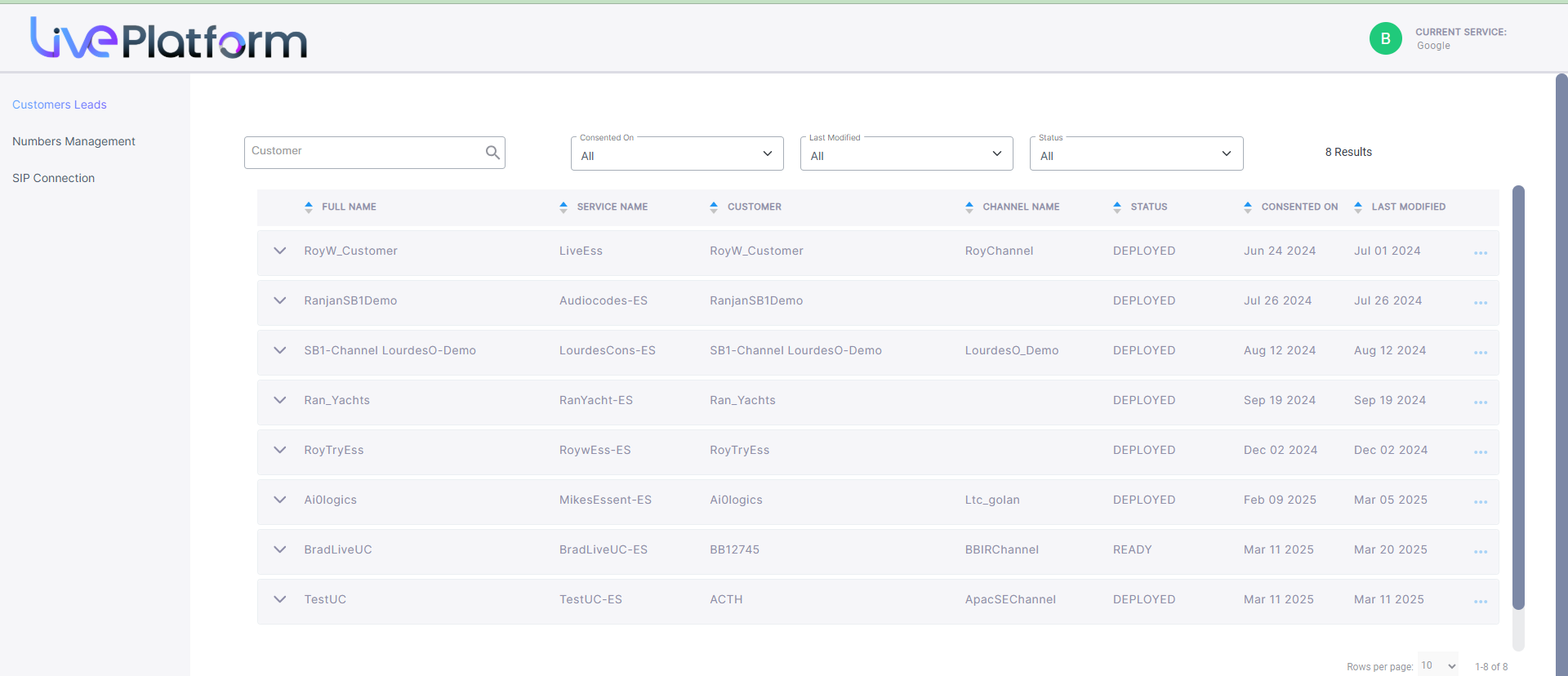
The table below describes the parameters in this page.
|
Parameter |
Description |
|---|---|
|
Full Name |
The Full name of the service. |
|
Service Name |
The Short name of the service. |
|
Customer |
The name of the customer attached to the service. |
|
Channel Name |
The name of the attached channel. |
|
Status |
Deployment status (see Deploy Status and Status Indicators). |
|
Consented On |
The time and date when the customer service was deployed. |
|
Last Modified |
The time and date when the service was last updated. For example, numbers uploaded. |
| 3. | Select the check box adjacent to the relevant service and then from the ...menu, choose Upload Numbers. |
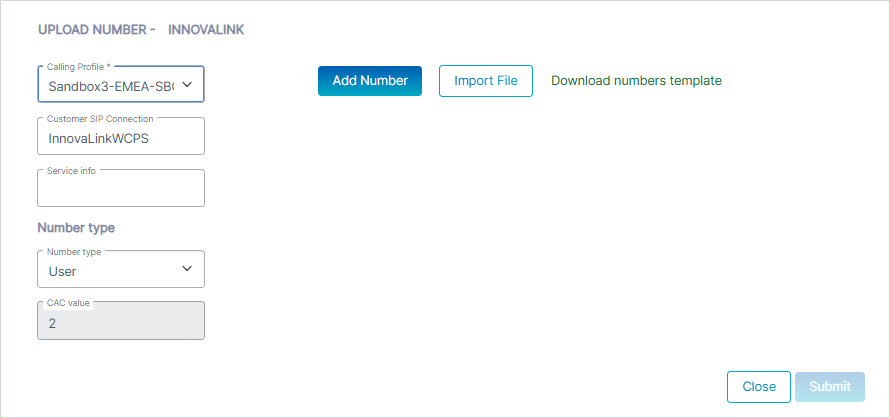
| 4. | Configure parameters according to the table below and then click Submit. |
|
Parameter |
Description |
|||||||||
|---|---|---|---|---|---|---|---|---|---|---|
|
Calling Profile |
From the Calling Profile drop-down list, choose a configured Calling Profile (see Configuring Calling Profiles). |
|||||||||
|
Customer SIP Connection |
In the Customer SIP Connection field, enter the name of the PSTN SIP Connection to apply to the number. Call routing for this number is performed through this connection. You cannot apply a SIP connection that has been imported from the SBC. |
|||||||||
|
Service Info |
In the Service info field, enter the name of the service or related information. This information is used by the Metering service. |
|||||||||
|
Number type |
From the Number type drop-down, select one of the following:
|
|||||||||
|
CAC Value |
In the CAC value field, enter the maximum number of concurrent sessions to apply to the number. This value is configurable for Contact Center and Service numbers. For Number type 'User', this parameter value is configured (range 2-10) |
| 5. | Click Add Number to add individual numbers. |
| 6. | From the drop-down list, choose Single number or Range. |
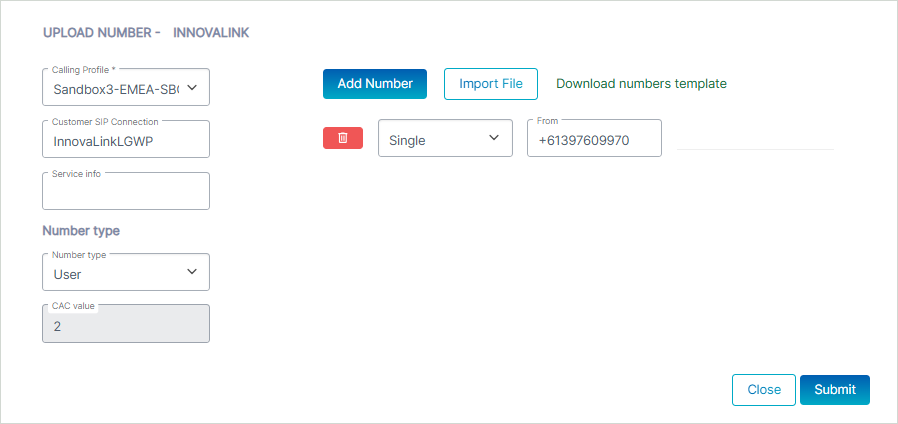
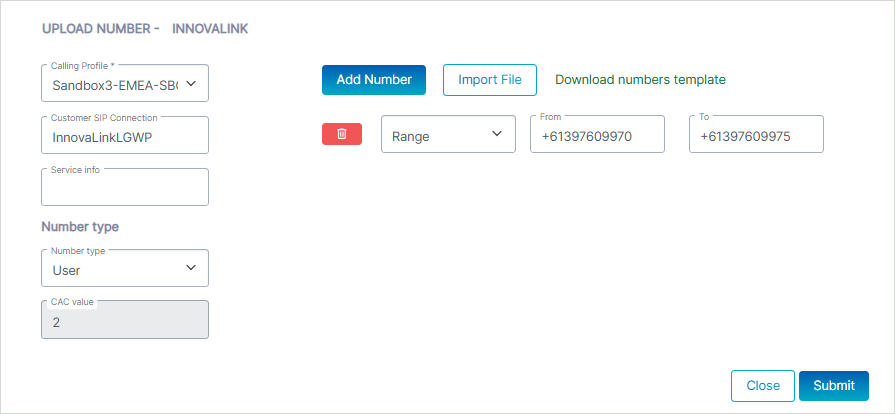
All numbers should be configured in E.164 format with a maximum of 15 digits, and with the following validation rules:
| ● | A + sign. |
| ● | Country calling code (international). |
| ● | Local area code. |
| ● | Local telephone number or subscriber number. |
The number has the following structure: [+][country code][area code][subscriber number].
Example United States Telephone number: +12127881500
| ● | Country code: 1 |
| ● | Area code: 212 |
| ● | Subscriber number: 7881500 |
| 7. | Enter the number(s) to upload in the relevant field and then click Submit. A confirmation message is displayed. |

| 8. | Click Download numbers template to open an example CSV file including the correct format for importing numbers. |
| 9. | Configure the file including the list of numbers that you wish to import. All numbers should be in E.164 format as described above. |
The figure below shows how to configure the cells with the '+' value before the country code prefix.
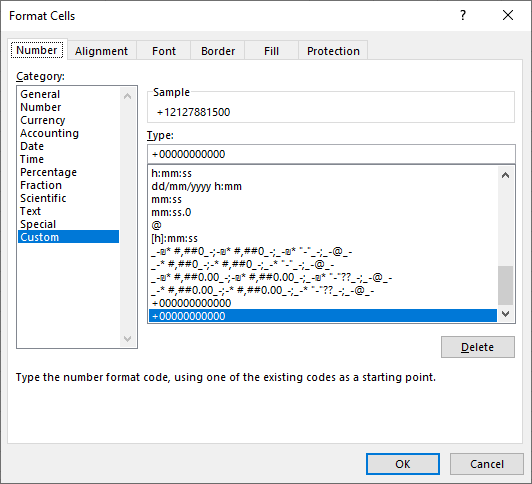
You cannot configure the Number Type in the CSV file, only single DID numbers or ranges.
| 10. | Click Import File. |
| a. | Browse to the location of the file. |
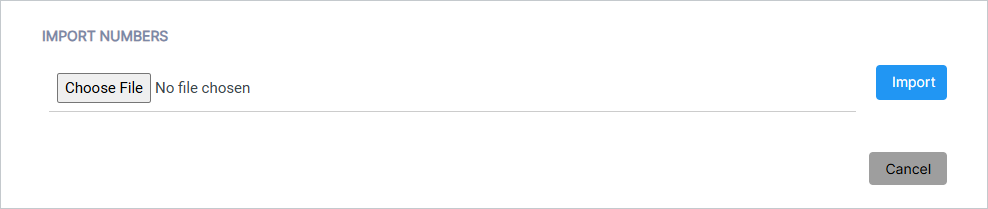
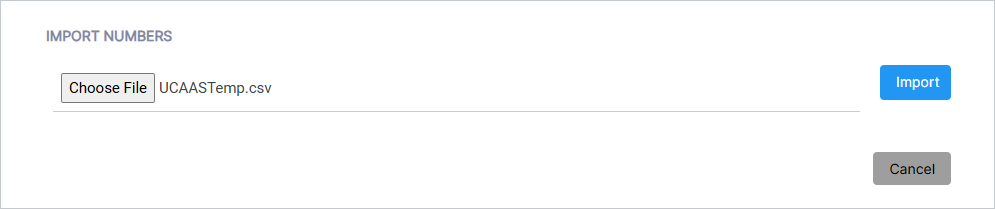
| b. | Click Import. The number import is validated. Close the dialog. |

The successfully imported number range is displayed.
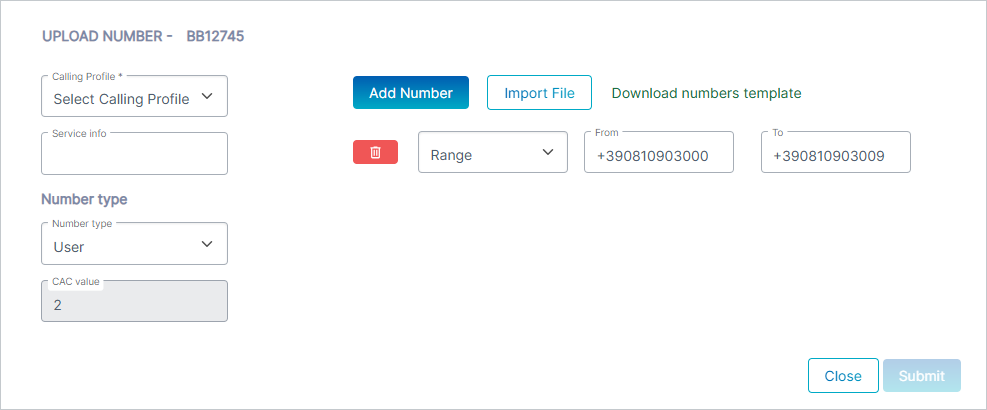
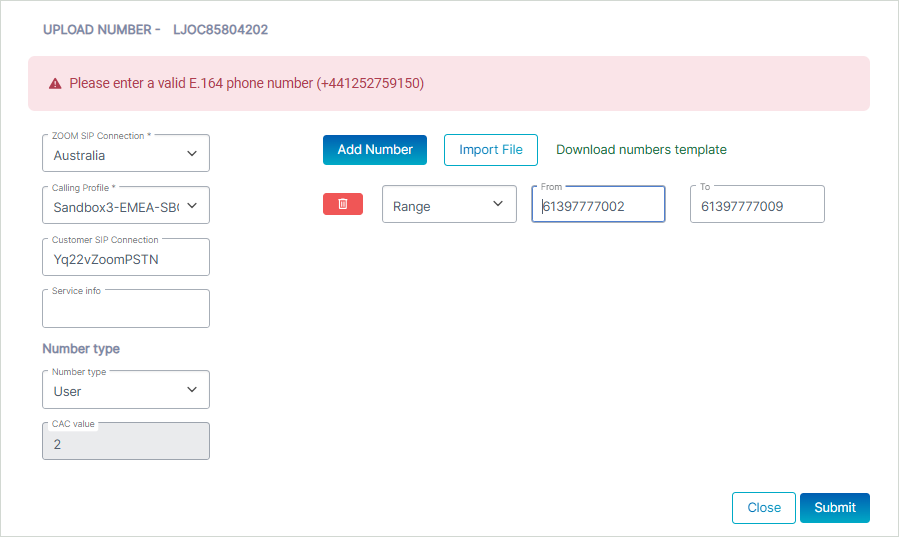
The figure below displays an example of an invalid range (missing + sign).
| 11. | Click Submit. |
A confirmation message is displayed.
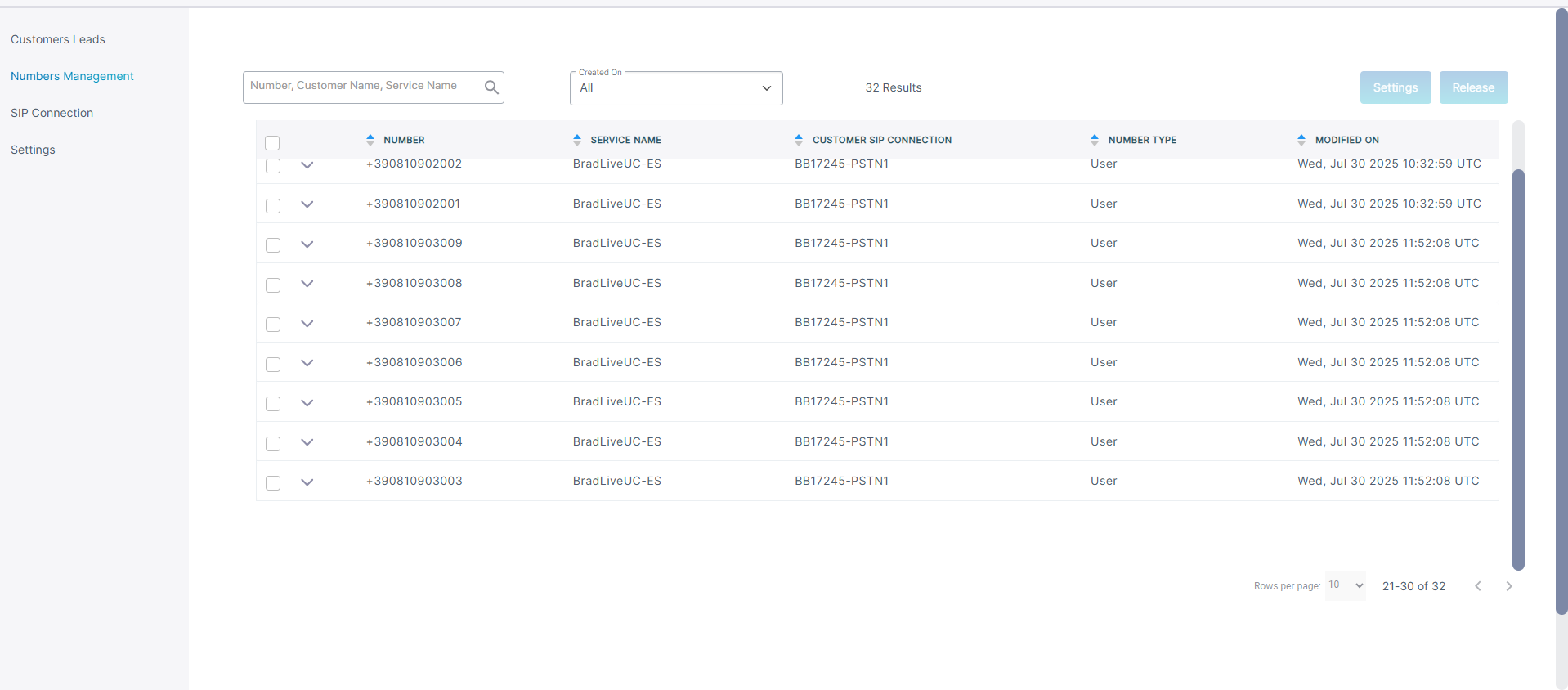
| 12. | Click the Numbers Management tab. Search for your customer and view the new numbers that you have just added. |